Why healthcare candidates aren't replying on LinkedIn
Healthcare candidates not replying on LinkedIn? Here's what's going wrong and how to get more responses with real details on shifts, team and travel time.
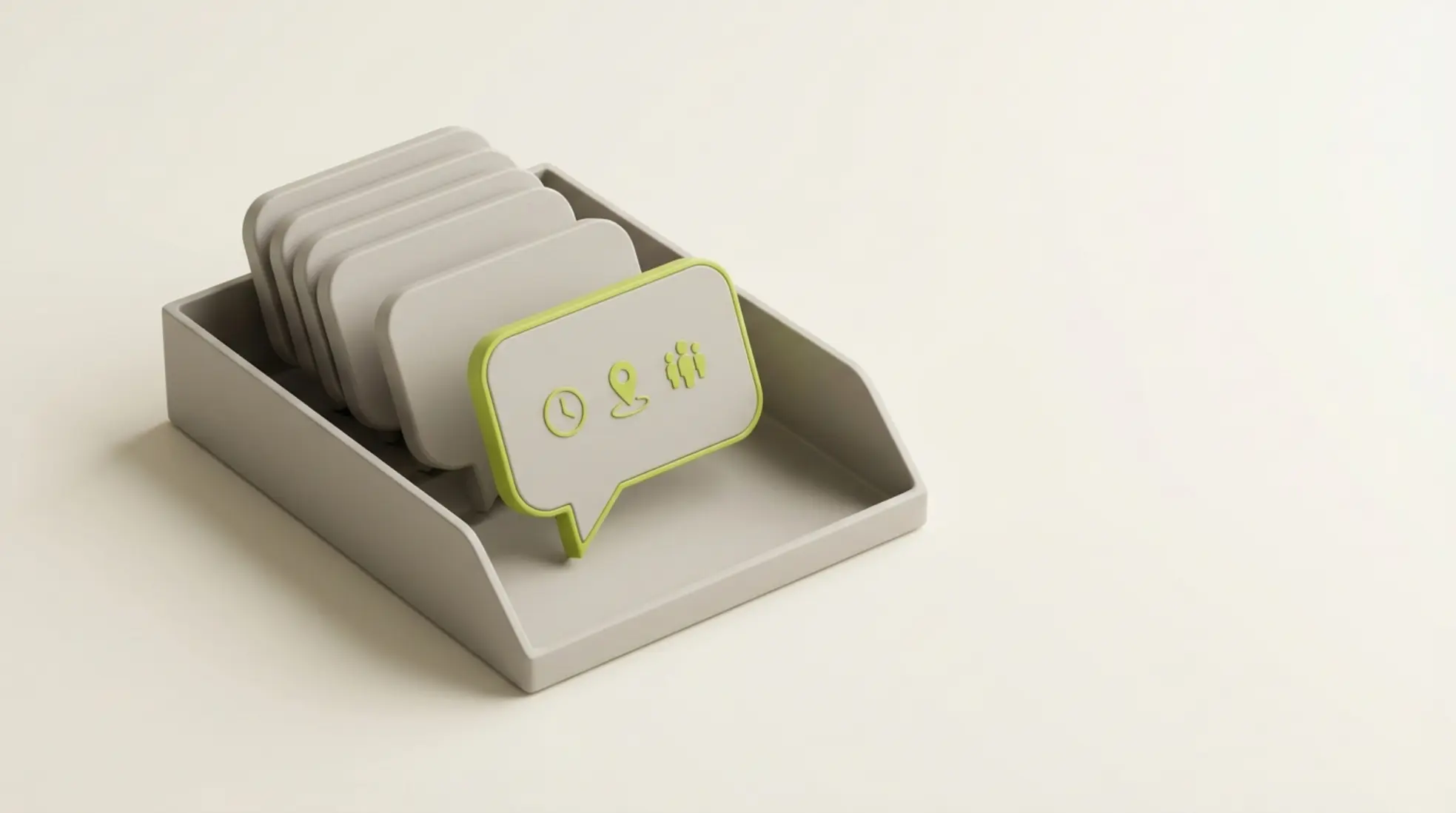
Healthcare professionals only respond to LinkedIn messages that immediately provide concrete information about the schedule, the team and travel time. Leaving out these practical details makes messages seem irrelevant and they go unanswered.
As a healthcare recruiter, you often don't get a reply to your LinkedIn messages, because your message doesn't match the way healthcare professionals make decisions. They mainly look at the roster, the team and the travel time. If this information is missing, your message simply doesn't feel relevant, and they don't reply.
This is a common problem for anyone wondering: why aren't healthcare candidates replying to my LinkedIn messages? The standard approach simply works less well in this sector. In this article, you'll discover exactly what's going wrong and what you can change right away.
- Healthcare professionals are less active on LinkedIn and reply later.
- Generic messages without concrete details get ignored quickly.
- Travel time, roster and team often matter more than salary.
- Small changes to your content already lead to more replies.
Why aren't healthcare candidates replying on LinkedIn? Here's what's really going on
Many recruiters notice that their usual approach doesn't work in healthcare. That's because healthcare recruitment on LinkedIn works differently than in many other sectors. Candidates often have a fairly brief LinkedIn profile as a healthcare professional, and they're also not active on a daily basis. This makes it considerably less likely that your message gets seen straight away.
On top of that, many healthcare candidates are passive. They're open to something new, but they're not actively looking. Their orientation usually happens through colleagues or the team they already work in. As a result, a standard LinkedIn message quickly feels distant and not very relevant.
Why aren't healthcare candidates replying on LinkedIn? The impact of overflowing inboxes
Healthcare professionals regularly receive messages. Especially for scarce roles, you'll see InMails piling up fast. A reply to an InMail in healthcare then often fails to materialise, because the messages start to look too similar. A connection request to a healthcare candidate without clear context is usually ignored too.
Trust also plays a big role. Candidates have often received vague or incomplete information about hours or shifts in the past. As a result, they read new messages far more critically. If your message doesn't create clarity straight away, they drop off.
Why aren't healthcare candidates replying on LinkedIn when your message is too generic?
Many messages simply stay too vague. Phrases like "great opportunity" or "interesting role" give the recipient nothing to go on. When sourcing nurses on LinkedIn, it's essential that someone can quickly see whether a role fits their working pattern and preferences.
An example of a poor message:
"Hi, I have an interesting role for you at a healthcare organisation. Would you like to talk about it?"
This doesn't work, because the content is completely missing. The candidate still knows nothing about the department, the shifts or the location. As a result, it feels like extra effort just to reply.
Write a personal message right here
Enter a name or LinkedIn URL and get a personalised message within 30 seconds. No account needed.
Why aren't healthcare candidates replying on LinkedIn because of the wrong focus?
Many recruiters put a strong emphasis on salary or the organisation, but in healthcare this works a little differently. Travel time for a healthcare vacancy often plays a much bigger role, as does the roster that comes with it. Especially when recruiting for irregular shifts, you need to realise that this completely determines the candidate's daily life.
The content of the work itself is also crucial. Think of opportunities for further training in nursing, or the size of the team. Both in hospital recruitment and in elderly care recruitment, practical clarity works far better than generic promises. People simply want to know exactly where they stand, straight away.
Why aren't healthcare candidates replying on LinkedIn, and what actually works?
What does work is being extremely specific. Name the type of organisation straight away, such as a hospital or a residential care provider. Clearly state which shifts are expected and make the travel time concrete, in minutes. That way, someone can judge in seconds whether the vacancy is relevant.
Personalising your outreach in healthcare means linking the content to someone's specific work situation. For example, mention the experience gained on a particular ward and explain why your vacancy is a perfect fit for that. This makes your message recognisable, personal and credible.
Anyone who wants to speed up this process can use handy tools that help make LinkedIn InMails more personal. This automatically makes your messages considerably more specific, without any extra manual work.
How do you write a LinkedIn message that actually works in healthcare?
A good message is short and to the point. It helps enormously to reason from the candidate's daily working reality.
"Hi [name], I saw your experience in the neurology department. In [hospital/region], they're currently looking for someone for day and evening shifts. The team has eighteen colleagues, and the travel time is around twenty minutes from where you live. Shall I quickly explain how the roster works?"
"Hi [name], for a small-scale elderly care location in [region], they're looking for a healthcare assistant. It's a fixed-shift role within a close-knit, small team. The location is only a quarter of an hour away. Shall I send you the details?"
This approach works excellently, because it's immediately clear. The candidate doesn't have to search for missing information and can decide straight away whether the offer is interesting.
Follow-up and timing in healthcare recruitment on LinkedIn
Timing is absolutely essential. Because of irregular shifts, healthcare professionals often only read their messages days later. So wait a little, and send a short follow-up after a few days. Add some new information straight away, such as details about the contract type or good training opportunities.
"Hi [name], I just wanted to add that part-time work is possible too, and that there's plenty of room for training. Do let me know if you'd like me to send you a bit more about this."
This provides valuable extra context without coming across as pushy.
Common mistakes made by LinkedIn recruiters in healthcare
Many messages are far too long and start straight away with an extensive story about the organisation. The actual role only comes up much later, so the reader has already dropped off within the first few lines. To make matters worse, the most concrete information, such as the type of shifts or the travel time, is often missing too.
Another common mistake is asking for too much too soon, such as pushing straight for a call. With passive healthcare candidates, this backfires. A low-key, small next step is far more effective.
For recruitment teams managing multiple vacancies at once, this problem often plays out even more strongly. On our page especially for recruitment agencies working in healthcare, we show you how to approach this at scale without giving up any quality in your messages.
How we help you generate more replies
We help recruiters automatically tailor their messages to the specific role, organisation and region. This makes every message immediately more specific and relevant to the recipient. You simply keep working within your own process, and you can work directly within LinkedIn, without any tedious extra steps.
In a real-world case study of better outreach, you can read how a team genuinely generated more replies with considerably less writing effort. This refreshed approach fits seamlessly with the way healthcare professionals make their decisions.
Want to know exactly where your messages are currently leaving opportunities on the table? Feel free to ask a question about your situation, so you can make targeted improvements where it really has an impact.
Write a personal message right here
Enter a name or LinkedIn URL and get a personalised message within 30 seconds. No account needed.
Want more responses from healthcare professionals?
Elvatix helps you boost response rates by enriching vacancies and outreach with the right data points. Use our smart recruitment technology to communicate the relevant details straight away.