Best Time to Send a LinkedIn Message, and How to Find It With Your Own Data
The best time to send a LinkedIn message depends on your own data. Learn when to send connection requests and how to measure timing for more replies.

There is no universal perfect moment for LinkedIn outreach; success depends on your target audience's specific work rhythm and on consistently measuring your own sending data.
There isn't one single best time to send a LinkedIn message that always works for everyone. Weekdays and daytime hours tend to give you the best odds of a reply, but your specific audience and their working rhythm ultimately determine the outcome. That's why an approach based on your own data works considerably better than generic advice. In this article, you'll learn how to put that into practice.
- Weekdays and daytime are a solid starting point, but not a fixed rule
- Candidates' response time determines when your data actually becomes reliable
- Differences between audiences mean timing needs to be set per niche
- Simple measurement quickly reveals your own best sending window
Why the best time to send a LinkedIn message isn't a fixed moment
There simply isn't a universal moment that always works. Plenty of recruiters send their messages at exactly the same times, such as Tuesday morning. As a result, inboxes get busier and the chance of a reply drops considerably. What used to work well suddenly delivers less. That's why the best time to send a LinkedIn message keeps shifting.
Still, general insights do offer some direction. Weekdays tend to outperform weekends, and mornings or early afternoons are usually the most active windows. You can see these patterns clearly in LinkedIn outreach benchmarks. Treat this as a starting point though, because your specific audience can behave very differently.
What market data says about the best time to send a LinkedIn message
Data consistently shows that the best day for a connection request usually falls somewhere between Monday and Thursday. The best day to send an InMail tends to sit in that same window. People are firmly in their working rhythm at that point, so they open their messages more often.
Even so, this behaviour varies a lot by role. A developer, for instance, often replies after wrapping up a focus block, while a manager tends to skim their messages quickly between meetings. So there's no fixed answer for exactly when to send a connection request. Use these general insights as a first hypothesis, then test them against your own results.
Why your audience determines the best time to send a LinkedIn message
Your audience's working rhythm is the single biggest factor in when your message actually gets read. In healthcare, for example, people often reply well outside standard office hours. In IT, on the other hand, you tend to see long stretches of uninterrupted focus. In commercial roles, messages are often checked quickly on the move. That means the best moment to approach a candidate varies enormously by audience.
Working across several niches? Then these differences only get bigger. Looking at LinkedIn outreach for recruitment agencies, you can see that every specialism really does have its own rhythm. A broad analysis at team level can hide these nuances, so always look at the numbers per audience and per recruiter.
Your own individual approach matters too. In the Vibe Group recruitment case study, it quickly became clear that better planning and the right timing for LinkedIn outreach had a direct, positive impact on results. That success came down to a strong combination of the right timing, a compelling message and a clear structure.
How to measure the best time to send a LinkedIn message with your own data
Measuring gives you the clarity you need. Look closely at candidates' response times, and wait patiently until your messages have had enough time to gather replies. While most responses land within a day, that's certainly not true for all of them. That's why your data needs time to mature before you can draw firm conclusions from it.
Keep your measurements simple and, above all, stay consistent in your approach. Work with fixed data fields, such as the day, the time of day, the number of messages sent, the number of replies received and your eventual response rate. Only look at messages that have matured. These are messages that have genuinely had enough time to generate a reply in the first place.
Make sure you also have enough volume. A few dozen messages sent per time slot might give you an initial indication, but only larger numbers deliver real reliability. If you want to set this up properly, you can use the best-send-time tracker to see your performance per time slot and analyse InMail timing based on solid results.
Testing the best time to send a LinkedIn message with a practical schedule
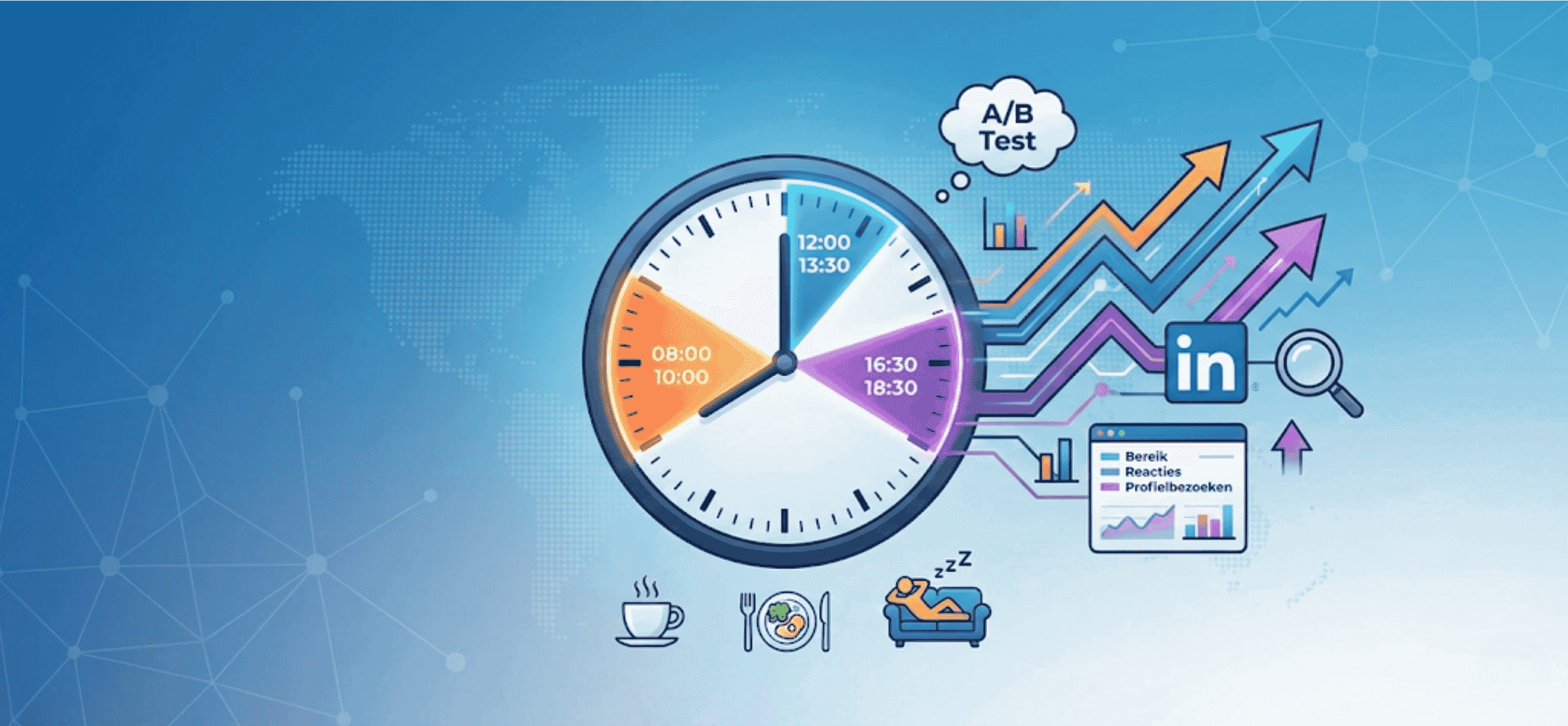
Testing this yourself doesn't need to be complicated. Start by picking two or three time slots, such as morning, afternoon and end of the working day. Keep your target audience and your specific message completely consistent, so you can make a fair comparison later. This forms the absolute foundation of successful outreach by time slot.
Then gather data over several consecutive days and compare the outcomes with each other. Pay close attention to your response rate, your acceptance rate and the average time to reply. See that a particular moment works better in practice? Then keep refining from there. This is how you work your way, step by step, towards the best possible sending time for a LinkedIn message.
Want to put this into practice straight away? You can start your own LinkedIn outreach and set up your own test structure right away. Just make sure you keep a sensible spread throughout, so the whole process stays easy to control.
Why the best time to send a LinkedIn message is rarely the middle of the night
Messages sent in the middle of the night tend to stand out immediately, and not in a good way. The odd timing can come across as unnatural and shape how the recipient reads your message. Candidates can also see exactly when something was sent, and they consciously or unconsciously factor that detail into their judgement.
On top of that, you lose control over the process at night. You simply see what's happening less quickly, which makes it harder to adjust in time. Sending during the day gives you far more visibility and keeps the whole workflow considerably easier to manage.
How the best time to send a LinkedIn message works together with content and targeting
Smart timing certainly helps, but it's obviously no magic fix on its own. If you're consistently approaching the wrong person, timing makes barely any difference at all. That's why razor-sharp targeting always remains the absolute foundation. From there, it's the actual content of your message that decides whether someone ends up replying.
That said, a strategically chosen moment does strengthen a message that's already relevant. So always look at the bigger picture. The timing of your LinkedIn outreach only works at its best when your chosen audience, the content of your text and the moment you send all line up seamlessly.
Getting started in practice with the best time to send a LinkedIn message
Start simple. Pick a handful of fixed time slots, measure your results in a structured way, and wait patiently until your data set is complete. Then compare the outcomes fairly and adjust smoothly wherever it seems necessary. Feel free to use available market data as general direction, but always let your own measured numbers take the lead.
By following exactly this approach, you'll discover step by step what actually works for your specific audience. That way, you gradually build an efficient process based entirely on real, tangible results rather than mere assumptions.
Frequently asked questions about the best time to send a LinkedIn message
When does LinkedIn outreach work best?
Weekdays generally perform a lot better than weekends. Mornings and early afternoons tend to be the most active windows. Even so, this varies a great deal by audience, which is why testing it yourself always remains necessary.
How quickly do candidates typically reply to messages?
By far most replies land within 24 hours. Even so, it's important to account for your candidates' average response time and only assess your gathered data well after that.
How much data do I actually need to determine a reliable sending time?
A few dozen messages sent per time slot already sketch a reasonable first picture. But if you want genuinely reliable conclusions, you need considerably larger numbers, spread properly across several measurement days.
What's typically the best day for a connection request?
Research suggests the best day for a connection request usually falls between Monday and Thursday. That said, the exact right moment depends entirely on your specific audience and their daily working rhythm.
When do your ideal candidates really respond?
Elvatix gives you detailed insight into how your LinkedIn outreach performs per niche and per recruiter. Optimise your schedule based on hard data instead of general assumptions.