What is a recruitment process? The 7 stages and how long each one takes
Find out exactly what a recruitment process is, the 7 stages it includes, how long each stage typically takes and where delays usually creep in during hiring.
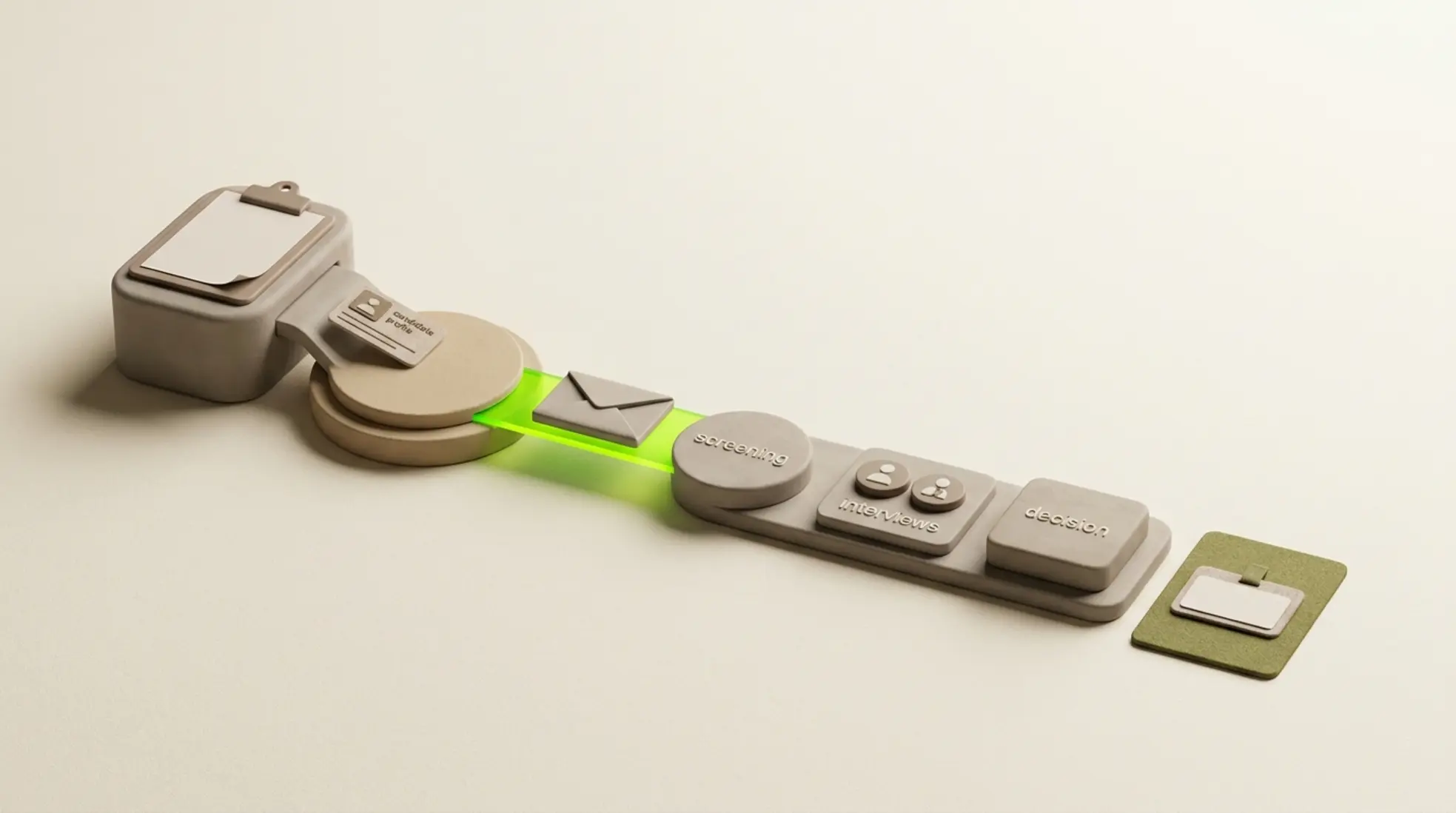
A successful recruitment process consists of seven phases from intake to onboarding, where speed and structure between the steps are essential to retaining talent. Working with fixed response times and clear measuring points prevents delays in the crucial stages of sourcing and selection.
A recruitment process is the fixed route an organisation follows to attract, assess, select and hire candidates. If you're wondering what a recruitment process is, you're probably after a practical overview of every step, from the initial intake through to onboarding. In this article you'll find the seven stages involved, how long each one typically takes and where delays tend to creep in.
- A recruitment process starts well before the vacancy goes live and only ends once the new hire has successfully settled in.
- Attraction and selection is an important part of it, but recruitment is broader. It also includes preparation, sourcing, the offer and onboarding.
- Most delays occur between sourcing, follow-up and the first conversation. In other words, they sit between the steps rather than within them.
- You can improve a recruitment process without skipping steps by working with clear decision points, fixed response times and straightforward metrics.
What is a recruitment process, and what does it include?
A recruitment process is the fixed method an organisation uses to attract and hire people. In plain terms, recruitment simply means bringing structure to finding, speaking with, assessing and hiring candidates. This makes the attraction and selection process clearer for recruiters, hiring managers and candidates alike.
When people ask what recruitment is, they usually mean the whole journey from vacancy to actual start date. In practice, recruitment is broader than just holding conversations and choosing a candidate. It also includes preparation, defining the target audience, the sourcing process, follow-up, decision-making and onboarding. The attraction and selection stages form an important middle section, but they don't cover the entire process.
This distinction matters, because delays often set in before the first candidate is even in the picture. Unclear requirements, too many decision-makers or too broad a search all lead to slow screening and delayed decisions further down the line. A fixed process helps you spot these problems early and resolve them faster.
What does a recruitment process look like in practice, from vacancy to onboarding?
In practice, the process starts with a simple question: why is this role needed, and who makes the decisions? From there, the steps of the recruitment process follow a logical order. You sharpen the role, define the target audience, search for candidates, approach them, run the selection process, make an offer and finally ensure a smooth start. This makes it clear to everyone who is responsible at each point and what information they need.
For new recruiters and small teams, it can help to think of recruitment as a route map. Each stage has a clear goal, an owner, specific inputs and a desired outcome. This lets you see at a glance where things run smoothly and where valuable time is being lost, which is especially useful when several colleagues are involved in the same vacancy.
The difference between recruitment and attraction and selection
Attraction and selection generally focuses on attracting, speaking with and choosing candidates. Recruitment goes a step further and also includes preparation, sourcing, making an offer and onboarding. When you look specifically at the attraction and selection stages, you're really zooming in on the middle part of the wider journey. This is exactly why a strong interview isn't enough if the intake or the follow-up is poorly structured.
The difference between time to fill and candidate lead time
"Time to fill" covers the total time from opening a vacancy to the moment a candidate signs their contract. Candidate lead time, on the other hand, is purely about the time an individual candidate spends within the process. Understanding this difference helps enormously when analysing your process, since a vacancy can stay open for a long time while candidates who are already in the pipeline move through quickly. Anyone looking to improve a recruitment process would do well to measure these two metrics separately.
What does a recruitment process look like when broken down into seven stages?
The easiest way to answer what a recruitment process is, is to break it down into recognisable stages. That way you can see exactly what needs to happen at each step, who is ultimately responsible and where unnecessary waiting time can easily be avoided. Below are the seven stages we see in almost every organisation.
Stage 1: Intake and sharpening the vacancy
This stage is all about clarity. The recruiter and the hiring manager work out together why the role is open, which tasks are genuinely essential and what experience is required. They also agree the salary range and decide who makes the final call. The inputs are the team's needs, the content of the role, the budget and the timeline. The desired outcome is a razor-sharp vacancy with crystal-clear agreements on ownership and expected lead times. This opening stage usually takes one to three working days. Delays here mostly stem from vague requirements, too many conflicting opinions and the absence of a clear decision-maker. A good check is to ask: can everyone involved describe a suitable candidate for this role in a single sentence?
Stage 2: Defining the target audience and sourcing
In this step you translate the intake into a concrete search direction. The goal is to map out a realistic target audience and build an initial shortlist. This responsibility usually sits with the recruiter or sourcer. The inputs needed are the agreed requirements, region, experience level, industry, salary and the places where suitable candidates are likely to be found. The result is a focused search that's broad enough to reach enough people, yet specific enough to stay relevant. Building this first shortlist usually takes one to five working days, though this can take longer for very scarce profiles. Unnecessary delays here mainly happen when search criteria keep changing or the target audience is too vaguely defined. Ask yourself: do we know exactly who we are, and aren't, targeting? On this point, you can read how finding candidates through AI sourcing helps in practice to build a usable shortlist significantly faster, while the recruiter keeps control over the actual assessment.
Stage 3: Approaching candidates and following up
This is the point where many processes unintentionally stall. The goal is to get the best-fit candidates moving and to handle follow-up actions promptly. The recruiter is usually the driving force behind this step. You start from the shortlist, the context from the intake, an engaging message and a clear next step. The desired outcome is very concrete: getting replies, booking conversations, or quickly getting clarity when someone isn't interested. This stage usually takes three to ten working days. The biggest sources of delay are manual writing, generic messages, late reminders and slow scheduling. In particular, the time between initial sourcing and the first conversation often takes longer than people expect beforehand. This is why it helps enormously to keep follow-up tightly organised and to be able to check messages quickly. On the page about how this part of the workflow works we show in detail how the LinkedIn side of things can be effectively supported, while interviews, assessment and hiring itself remain genuinely human work.
A common real-world example is a rock-solid shortlist achieving little because candidates only receive a first message after several days, or because a positive reply goes unanswered. Interest then fades quickly, making it unnecessarily hard to schedule a conversation. In the Manpower case study you can see an impressive measured response rate of 43%. That specific figure is obviously tied to that particular context, but it does underline that faster follow-up almost immediately has a positive effect on the rest of the process. A useful check here is: how much time typically passes between the shortlist and the first actual conversation?
Stage 4: Selection and initial screening
In this stage you test against the agreed baseline requirements. The primary goal is to quickly and effectively assess whether someone meets the hard requirements, availability, salary expectations and motivation. This initial screening is usually handled by the recruiter, sometimes in consultation with the hiring manager. The inputs for this stage are the CV, the reply, the first point of contact and the pre-agreed rejection criteria. Ideally, this results in a smaller, higher-quality group of candidates ready for an in-depth conversation. This screening usually takes one to four working days. As soon as requirements aren't sharp enough, several people duplicate the same groundwork, or feedback is slow to arrive, the process starts to lag. Check this by asking yourself: do we know in advance exactly which points make a candidate move forward or get rejected?
Stage 5: Interviews and assessment
During the conversations you go deeper into the content, team fit and mutual expectations. After all, you want to make a fair, well-comparable choice based on criteria agreed in advance. Those responsible are generally the recruiter, the hiring manager and sometimes a number of future colleagues. The inputs needed are the interview questions, the assessment points and earlier findings from the screening stage. The end goal is a well-substantiated choice between the best-fit candidates. Allow around one to two weeks for this stage, mainly depending on diaries and the time needed for internal feedback. You can avoid waiting time here by not scheduling conversations in isolation from one another and by sharing feedback straight away rather than waiting days. The key check here is: are all interviewers actually assessing candidates against the same criteria?
Stage 6: The offer and decision-making
Ideally, this stage is fast and clear. The recruiter, the hiring manager and often HR too agree on who the preferred candidate is and under what conditions the offer will be presented. This is based on the previous assessments, the applicable terms of employment, budget and internal approval. The end result is either a very concrete offer or a respectful, clear rejection. Allow two to seven working days for this step. Delays here are usually caused by slow internal alignment, unclear approval processes or getting in touch too late after the final interview. A logical check is: does everyone know exactly who makes the final call, and within what timeframe?
Stage 7: Onboarding and a successful start
The recruitment process obviously doesn't end once a contract is signed. In this final stage you make sure the new hire starts well-prepared and can get up to speed quickly. HR, the line manager and sometimes IT or operations are closely involved. The inputs are the agreed contract details, the agreed start date, the equipment needed, the schedule and the induction programme. What you're aiming for is a seamless, positive handover from recruitment to the actual workplace. This stage often only takes a few days of practical preparation, while the actual start date may lie further ahead due to a notice period. Missing information, a late handover or a vague induction programme all lead to avoidable friction. Ask yourself: does our new colleague already know, well before day one, exactly what to expect?
Tip: Elvatix gets more out of every InMail credit. Higher response rates, lower cost per contact.
See how →How long does each stage of a recruitment process take, and where does it usually get stuck?
If you're wondering how long a recruitment process takes, you're best served by realistic time indications per stage. The total lead time depends heavily on factors such as scarcity in the labour market, response speed, the number of colleagues involved and how much room there is in everyone's diary. A single overall average is therefore far less useful than a breakdown by step.
- Stage 1, intake and sharpening the vacancy: usually 1 to 3 working days.
- Stage 2, defining the target audience and sourcing: usually 1 to 5 working days up to the first shortlist.
- Stage 3, approaching candidates and following up: usually 3 to 10 working days.
- Stage 4, selection and screening: usually 1 to 4 working days.
- Stage 5, interviews and assessment: usually 1 to 2 weeks.
- Stage 6, the offer and decision-making: usually 2 to 7 working days.
- Stage 7, onboarding and preparing for the start: often a few days of preparation, while the actual start date can naturally fall later.
Most delays show up not during, but between the different steps. You see this happen, for example, with overly broad searches, slow manual writing in outreach, sluggish follow-up on incoming replies and interviews that get scheduled unnecessarily far ahead. The stretch between the sourcing process and the very first introductory conversation in particular proves extremely sensitive to delay, since several small actions happen back-to-back in a short space of time. In organisations with complex internal alignment, this plays an even bigger role. For recruitment processes with multiple stakeholders, it's therefore essential to agree responsible roles, maximum response times and specific handover points in advance.
What does it take to improve a recruitment process without skipping steps?
Optimising a recruitment process certainly doesn't mean blindly cutting parts out. It does mean critically examining which time invested actually adds value, and which time simply comes from waiting, unclear responsibilities or duplicated work. Improving your recruitment process is therefore mostly a question of organising things more intelligently.
Work with clear decision points
Agree clearly who makes the decisions after the intake, after screening and after the conversations. Also agree in advance what information is needed to make that decision. This prevents extra, time-consuming discussion rounds that stem from doubt or constantly having to chase missing feedback.
Agree fixed response times
One simple agreement often makes a tangible difference straight away. Think of responding to incoming CVs within two working days, and giving feedback after interviews within a maximum of one working day. This keeps candidate lead time short and keeps the process pleasant and transparent for the candidate.
Measure with simple date fields
You don't need a complicated dashboard to spot potential bottlenecks. Simply record a handful of dates per vacancy and per candidate, such as: intake completed, first shortlist, first message sent, first reply, first interview, final conversation, offer and final agreement. This lets you see at a glance whether delays are mainly building up in sourcing, follow-up, screening or decision-making. This data also makes it much easier to keep "time to fill" and candidate lead time properly separate.
Reduce handovers between teams
Every internal handover increases the risk of delay and loss of important context. So assign one clear, fixed owner per stage. This person proactively monitors progress, chases up feedback on time and makes sure candidates don't unintentionally get stuck between two teams.
Keep assessment human, and automate repetitive work where possible
Conducting interviews, assessing candidates and making the final hiring decision remain human choices at all times. Repetitive manual work in finding, approaching and following up with candidates, on the other hand, can be organised far more intelligently. It's precisely in these steps that most time leaks away. Want to test this in a low-risk way? You can try this out with a single vacancy or target audience, where you always check every message yourself before it's actually sent.
Frequently asked questions about recruitment
What is recruitment in simple terms?
Recruitment covers the entire process of finding, identifying and ultimately hiring a suitable candidate. It starts simply with the question of why you need someone in the first place, and runs all the way through to the moment that person successfully starts in their new role.
What does recruitment mean for a small or medium-sized business?
For a small or medium-sized business, recruitment essentially means bringing much-needed structure to hiring. You agree concretely who makes the final calls, where you're looking for candidates, what criteria you assess them on and when feedback happens. This makes the flow of new talent far less dependent on one-off, ad-hoc actions or whatever's most urgent on the day.
How long does a recruitment process take on average?
This depends heavily on the specific role, the target audience and the organisation itself. A relatively simple process with fast decision-making can be fully completed within a few weeks. But if you're looking for a scarce profile with several people involved in the conversations, the process will naturally take longer. In practice, it's therefore more useful to analyse the time spent per individual stage than to fixate on a single, absolute total lead time.
Which stages belong to attraction and selection?
Attraction and selection traditionally consists of defining the target audience, actively searching, approaching, screening, interviewing and finally selecting a candidate. But viewed from the wider perspective of a complete recruitment process, the intake, the actual offer and onboarding are an integral part of it too.
How can you optimise a recruitment process?
Always start by identifying where valuable time is being lost. Then create clear decision points, agree firm response times, schedule interviews into diaries faster and minimise the number of handovers. Turning these levers significantly speeds up the process without sacrificing any care or quality.
What is the difference between the sourcing process and the selection process?
Within the sourcing process, the entire focus is on identifying potential candidates and defining the right search direction. The selection process only begins once you start testing the candidates you've found against hard requirements, intrinsic motivation and overall suitability for the position.
When exactly does onboarding start within recruitment?
Onboarding starts exactly at the moment the chosen candidate officially accepts your offer. From that point on, the focus shifts immediately to the contract, the equipment needed, a tight schedule and, of course, enabling a flying start during the first period in the role.
Practical overview of the 7 stages and their typical timeframes
A complete recruitment process runs from the intake through to onboarding in seven highly recognisable steps. First, you sharpen the role and the vacancy. Then you carefully define the target audience and the right search direction. Next, you search, actively approach candidates and ensure tight follow-up. After that comes the first round of selection and screening, followed by in-depth interviews and the final assessment. Finally, you finalise the considered choice and the offer. Last but not least is onboarding, which ensures your new colleague starts fully prepared. Although the time each stage takes varies, as a rule of thumb you can expect one to three working days for the intake, one to five working days for the first sourcing step, three to ten working days for approaching and following up, one to four working days for screening, one to two weeks for the interview stage, two to seven working days for the offer, and a further few days of practical preparation for onboarding.
By comparing this overview with your own hiring process, you'll quickly spot where you can make concrete improvements. For many hiring teams, the biggest gains are hidden in a sharper intake, a well-defined sourcing process, significantly faster follow-up and a shorter wait between first contact and the very first conversation. Focus on these, and you'll make the whole journey far more predictable for your own team, and considerably more pleasant for the candidate.
Write a personal message right here
Enter a name or LinkedIn URL and get a personalised message within 30 seconds. No account needed.
Optimise your recruitment process with Elvatix?
Elvatix gives you control over your entire workflow with concrete measuring points and streamlined communication between recruiters and hiring managers.